By the LeakLab AZ Team · Reviewed by LeakLab’s leak detection technicians · Last updated September 2026
Quick answer: A venturi skimmer is a pool skimmer that gets its pulling power from return water instead of pump suction. A small jet of return water shoots through a nozzle inside the skimmer. That jet drags surface water through the basket and back into the pool. Because the skimmer no longer needs suction, you can send 100% of your pump’s suction to the main drain. On a pool with an in-floor cleaning system, that extra drain suction is what keeps the floor clean all week.
Plenty of Mesa pools with in-floor cleaning systems look great on service day and dusty by day three. In many cases, nothing is broken. The valves are simply set wrong. A venturi skimmer, set up the right way, can fix that without new equipment.
In this guide, we explain what a venturi skimmer is and how it works with an in-floor pool cleaning system. We also walk through the exact valve setup Brandon from LeakLab shows in the video below.
Video: Brandon from LeakLab shows how to set up a venturi skimmer on a pool with an in-floor cleaning system.
What Is a Venturi Skimmer?
A venturi skimmer is a skimmer with a built-in water jet that creates its own suction. A standard skimmer can only pull water through the pump’s suction line. As a result, the skimmer and the main drain have to share the pump’s pulling power.
A venturi skimmer works differently. It has its own small return line, often called the quick skim, which feeds a nozzle inside the skimmer body. Several major brands make them, including Pentair, Waterway, and Paramount.
How the Venturi Effect Works in a Pool Skimmer
Here is what happens when the quick skim valve opens:
- A stream of return water flows into the skimmer. On the pool in our video, it was about 8 to 10 gallons per minute.
- The water shoots through a nozzle, and a diverter piece aims it back out through the pool wall.
- As the jet rushes out, it drags the water around it along for the ride. This pull is the venturi effect.
- Surface water flows over the weir door, through the basket, and straight back into the pool.
In other words, the skimmer keeps cleaning the surface, but none of that water goes down the suction line.
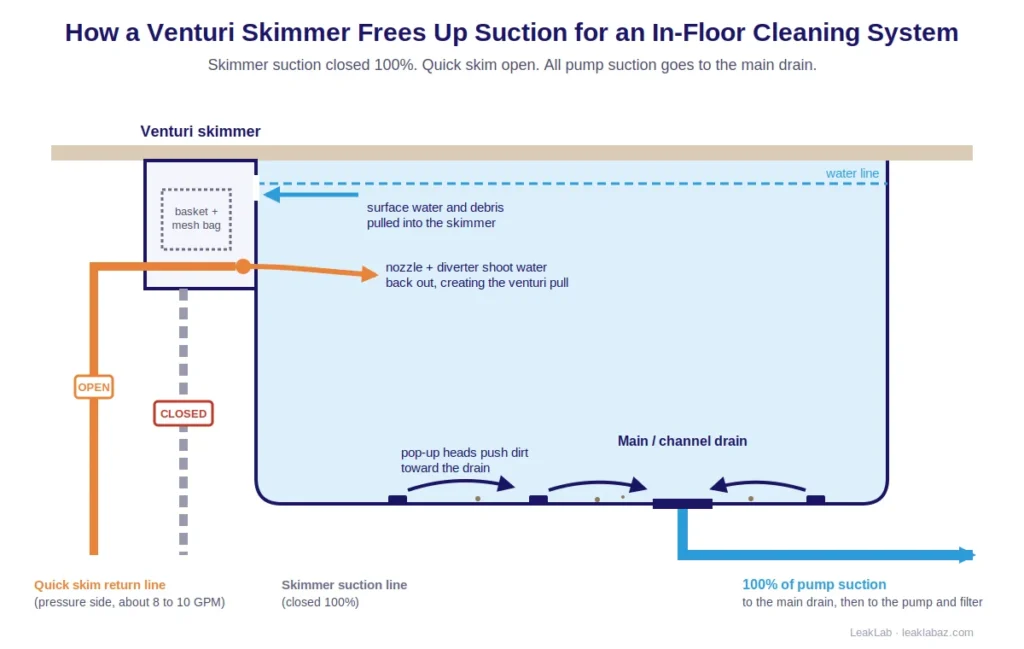
With the skimmer suction closed and the quick skim open, a venturi skimmer keeps skimming while the main drain gets full suction.
Why Main Drain Suction Matters for an In-Floor Pool Cleaning System
A venturi skimmer matters most on pools with an in-floor cleaning system. These systems use pop-up heads set into the pool floor. The heads rise in zones and spray water across the floor. That current pushes dirt toward the main drain, where suction pulls it into the filter.
Brandon sums it up simply in the video. An in-floor cleaning system only works as well as its main drain suction. More suction lets the drain pull in dirt from farther away. With less suction, dirt settles back down before it ever reaches the drain.
That is the catch with a standard skimmer. To keep the skimmer working, most pools run a split, such as 50% skimmer and 50% main drain. So the in-floor system only gets half the suction it could have.
Also, not every in-floor system is built the same. Some older systems don’t perform as well as newer designs. The pool in our video had two big advantages: a dedicated channel drain for larger debris, and a venturi skimmer.
How We Dialed In a Venturi Skimmer on a Customer’s Pool
We had just finished a pool leak detection on this job, but the pool wasn’t looking its best. Storms had rolled through the night before, and debris was sitting on the floor. So Brandon took a few minutes to film how to set up the venturi skimmer. The goal was simple: a pool that looks good seven days a week, not just on service day.
Step 1: Check How the Suction Is Split
When we started, the suction valve was set to 50% skimmer and 50% main drain. The skimmer was working. However, the in-floor system was only getting half of the pump’s pull.
Step 2: Close the Skimmer Suction Valve All the Way
Next, Brandon found the dedicated skimmer suction line and closed it 100%. At that point, the skimmer stopped working. That is exactly what should happen. All of the suction was now going to the main drain.
Step 3: Open the Quick Skim on the Return Side
Then he opened the quick skim valve on the pressure side. Water started flowing through the nozzle and diverter in the skimmer. Within moments, the skimmer was pulling surface water again, and pulling it well. It worked even though its suction line was fully closed.
Step 4: Check the Mesh Bag, Nozzle, and Diverter
Finally, Brandon pulled the basket and found the one thing this pool was missing: the mesh bag. A venturi skimmer sends water straight back into the pool. Without a mesh bag, any debris smaller than the basket holes shoots right back in.
He also checked that the nozzle and diverter pieces were in place. The skimmer can’t create the venturi effect without them.
Once the mesh bag went in, this pool was dialed in. The main drain had full suction for the in-floor system, and the skimmer was still clearing the surface.
Why a Venturi Skimmer Makes Sense for Arizona Pools
A venturi skimmer is especially useful in the Arizona desert. In-floor cleaning systems are popular here because desert pools collect more dust and fine dirt than leaves. Monsoon season makes it worse. One dust storm can leave a layer of dirt across the pool floor overnight, just like on this job. When that happens, you want every bit of main drain suction working for you.
The same storms bring other problems, too. We cover how monsoon storms can cause pool leaks in a separate guide.
When Weak Suction or a Struggling Skimmer Points to a Pool Leak
Sometimes a venturi skimmer or in-floor system underperforms for a reason no valve setting can fix. A leak on the suction side of the plumbing can let air into the system. That air weakens how hard the pump pulls. Watch for these signs:
- Air in the pump basket. Bubbles or a half-empty basket often mean air is getting in. Our guide on why there is air in your pool pump basket explains the usual causes.
- Water loss beyond evaporation. If you keep topping off the pool, the water is going somewhere.
- Wet ground near the equipment. A wet spot in the yard near your pool equipment often points to a plumbing leak.
Skimmers themselves are also one of the most common places pools leak. In addition, in-floor systems have extra plumbing, so they have extra places to leak. Our guide to leak detection for in-floor cleaning systems explains how we test each zone.
Frequently Asked Questions About Venturi Skimmers
These are the questions we hear most about the venturi skimmer and in-floor cleaning systems.
What does a venturi skimmer do?
It skims leaves, bugs, and debris off the pool surface using return water instead of pump suction. This frees up the pump’s suction for the main drain, which helps an in-floor cleaning system clean the floor better.
Can I add a venturi skimmer to my existing pool?
Usually only during a remodel or new build. A venturi skimmer needs its own return line and valve, so it is not a simple swap for a standard skimmer. A pool builder can tell you if your plumbing can support one.
Should I close my skimmer valve if I have an in-floor cleaning system?
Only if you have a venturi skimmer with the quick skim running. On a standard skimmer, closing the suction valve stops skimming completely. With a venturi skimmer, the quick skim keeps the skimmer working while the main drain gets full suction.
Do I need a mesh bag in a venturi skimmer?
Yes. A venturi skimmer returns water directly to the pool. Without a mesh bag, fine debris passes through the basket holes and shoots right back into the water.
Why is my in-floor pool cleaning system not keeping the pool clean?
The most common causes are low main drain suction, valves set to the wrong split, and missing skimmer parts. If those all check out, the next step is to rule out a suction-side leak.
Can weak pool suction be a sign of a leak?
Yes, it can. A leak on the suction side can pull air into the plumbing and reduce suction. Air in the pump basket is the most common clue.
Need Help With Pool Suction Problems in Mesa?
If your venturi skimmer and in-floor system are set up correctly but the pool still loses water or pulls air, a leak may be the cause. LeakLab specializes in non-invasive pool leak detection and pool leak repair across Mesa and the East Valley. Schedule an appointment online or call us at (602) 622-8390.