
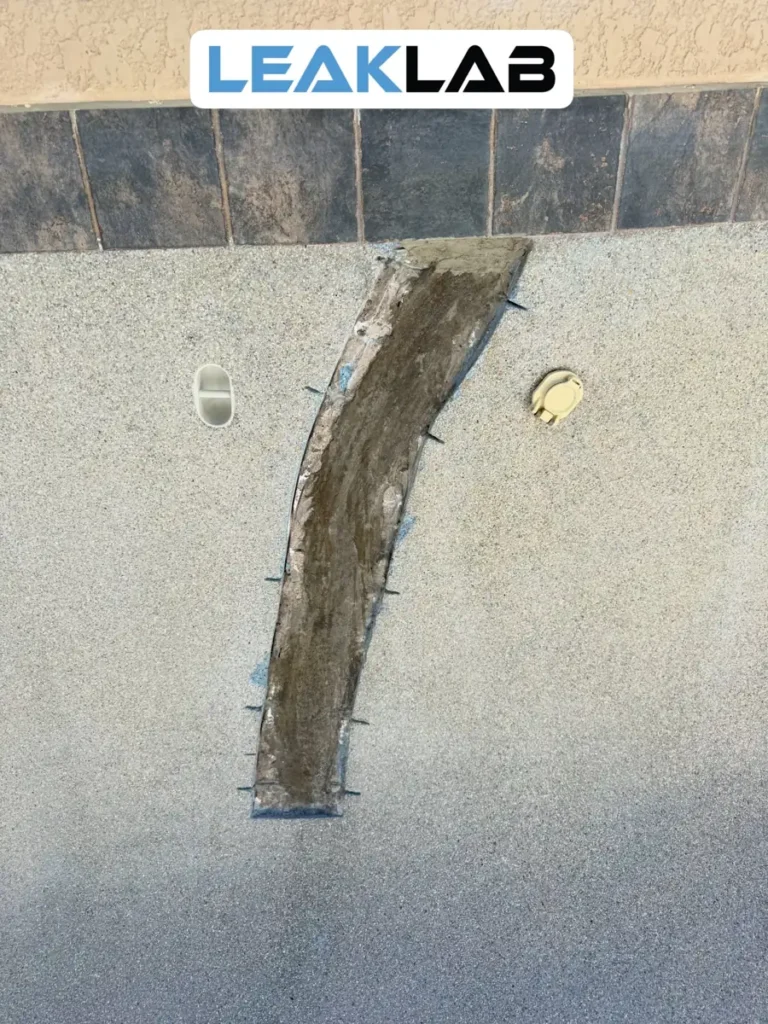
Pool crack repair is the process of opening up a crack in a pool shell, locking the two sides together so they stop moving, sealing it against water, and then restoring the tile and finish. On this Scottsdale job, we stapled a structural wall crack, waterproofed it, reset and grouted the waterline tile, and finished with a pebble patch matched to the existing surface. Below, we walk through every step with real photos from the job.
At LeakLab, we do all of our repairs in house. That means the same crew that finds the problem also fixes it. So nothing gets lost in a handoff between a leak tech and a subcontractor. This case study shows what that looks like on a real pool in Scottsdale, Arizona.
The Problem: A Crack Running Down a Scottsdale Pool Wall
This pool crack repair started with a crack you could see right through the water. It ran down the wall between two wall fittings, starting just under the waterline tile. On a gray pebble finish, it showed up as a darker seam that didn’t match the rest of the surface.
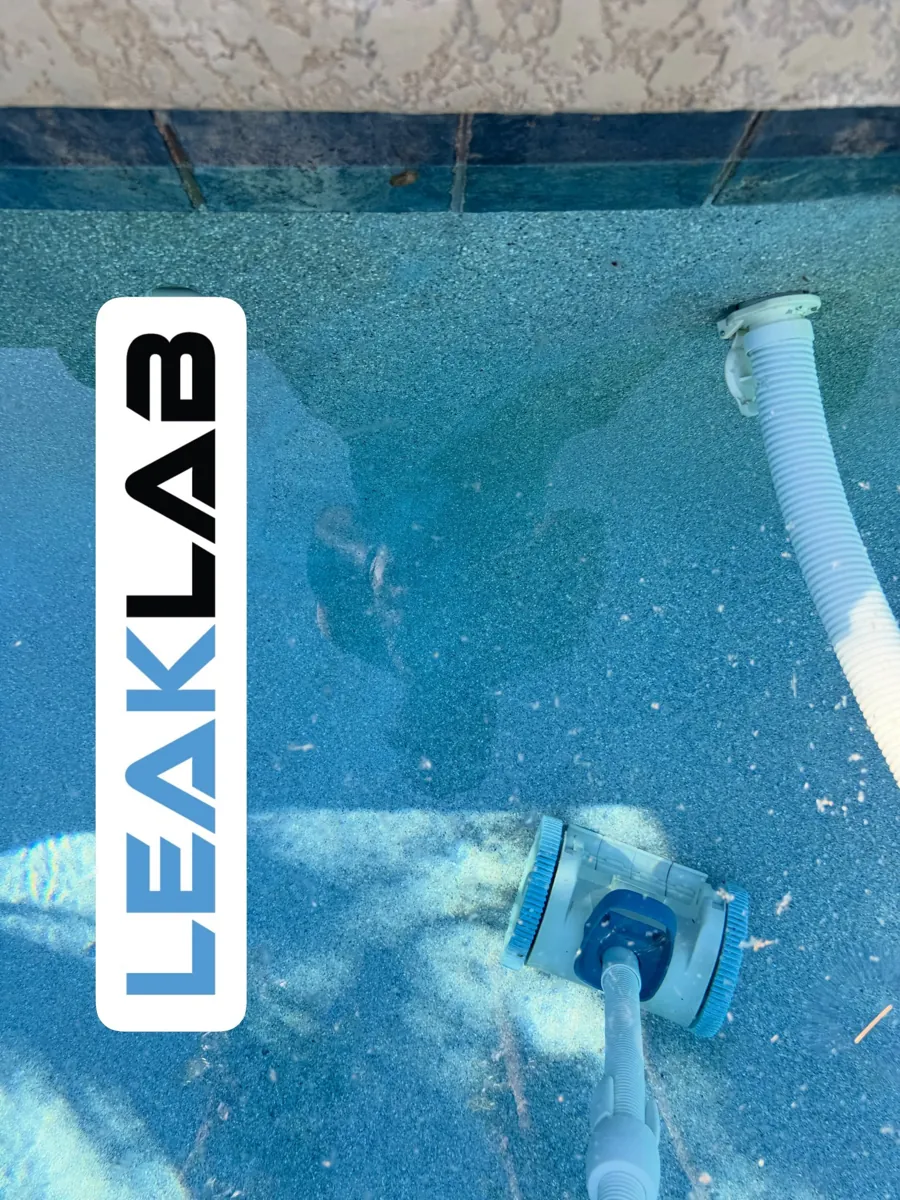
A crack like this is easy to shrug off. After all, the pool still looks fine from a lounge chair. However, a crack that runs through the shell, and not just the surface finish, can move water. It can also keep growing. In our experience, the earlier you deal with it, the smaller the repair.
How We Confirmed the Pool Wall Crack Was Leaking
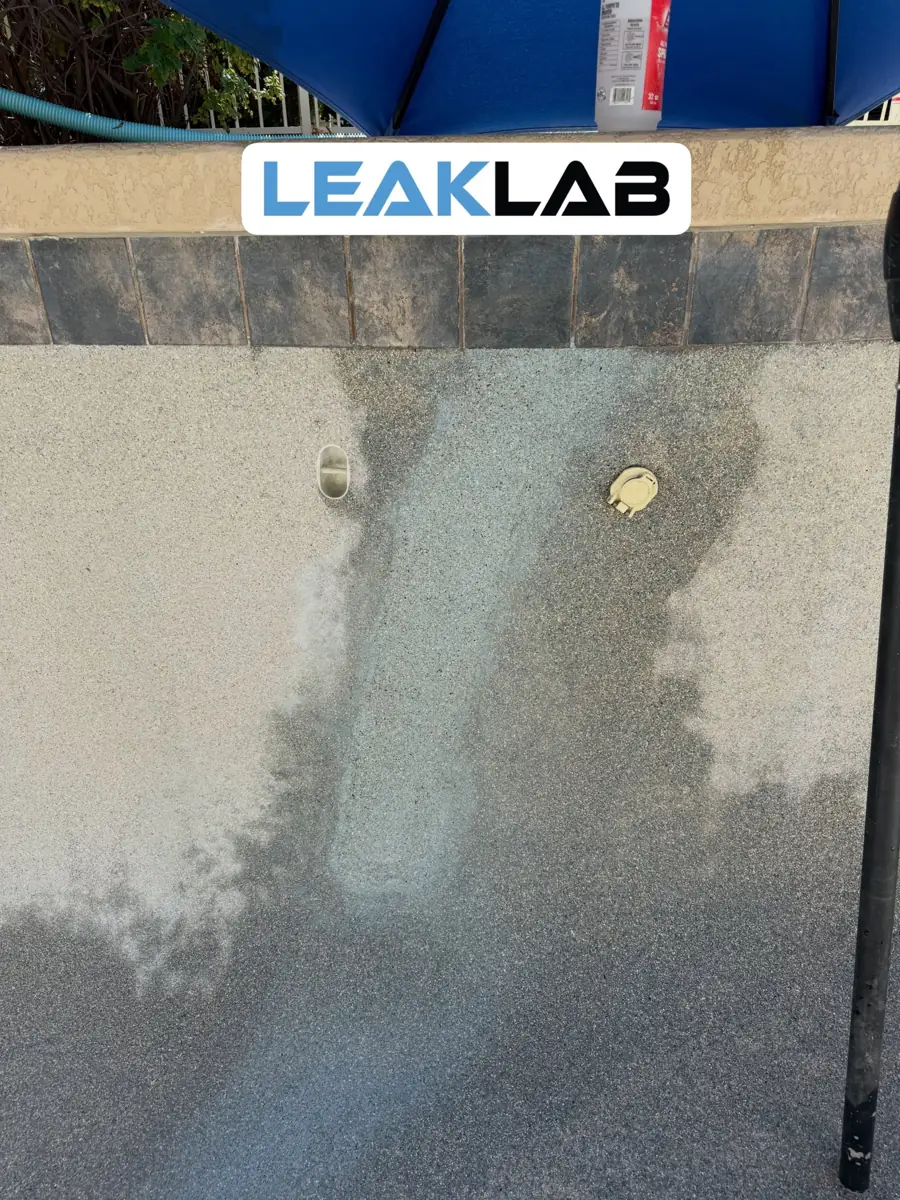
Once we drained the pool down, the wall told the story. As the pebble finish dried in the sun, a dark band of moisture stayed behind. It traced the path of the crack between the fittings and down the wall. In short, water was moving through that crack, not just sitting on top of it.
If you’re not sure whether your own pool is losing water, start by checking if it’s a leak or just evaporation. That simple test saves a lot of guessing.
Why Surface Patches Fail on Structural Pool Cracks
A quick surface patch is the most common shortcut in pool crack repair, and it’s the reason so many cracks come back. Putty or a skim coat only seals the top. Meanwhile, the shell underneath keeps flexing with heat, soil movement, and water weight. Each time it moves, the patch cracks along the same line.
Arizona makes this worse. Our soil swells and shrinks with monsoon rains and long dry spells. On top of that, summer days swing hard from cool nights to blazing afternoons. Both of those put stress on a concrete shell. So a crack that isn’t locked in place will almost always open back up.
That’s why we don’t just cover a structural crack. Instead, we stop it from moving first. Then we seal it.
Our Step-by-Step Pool Crack Repair Process
Here is the exact pool crack repair process we used on this Scottsdale pool, in order. Each step builds on the one before it.
Step 1: Chase Out the Pool Wall Crack
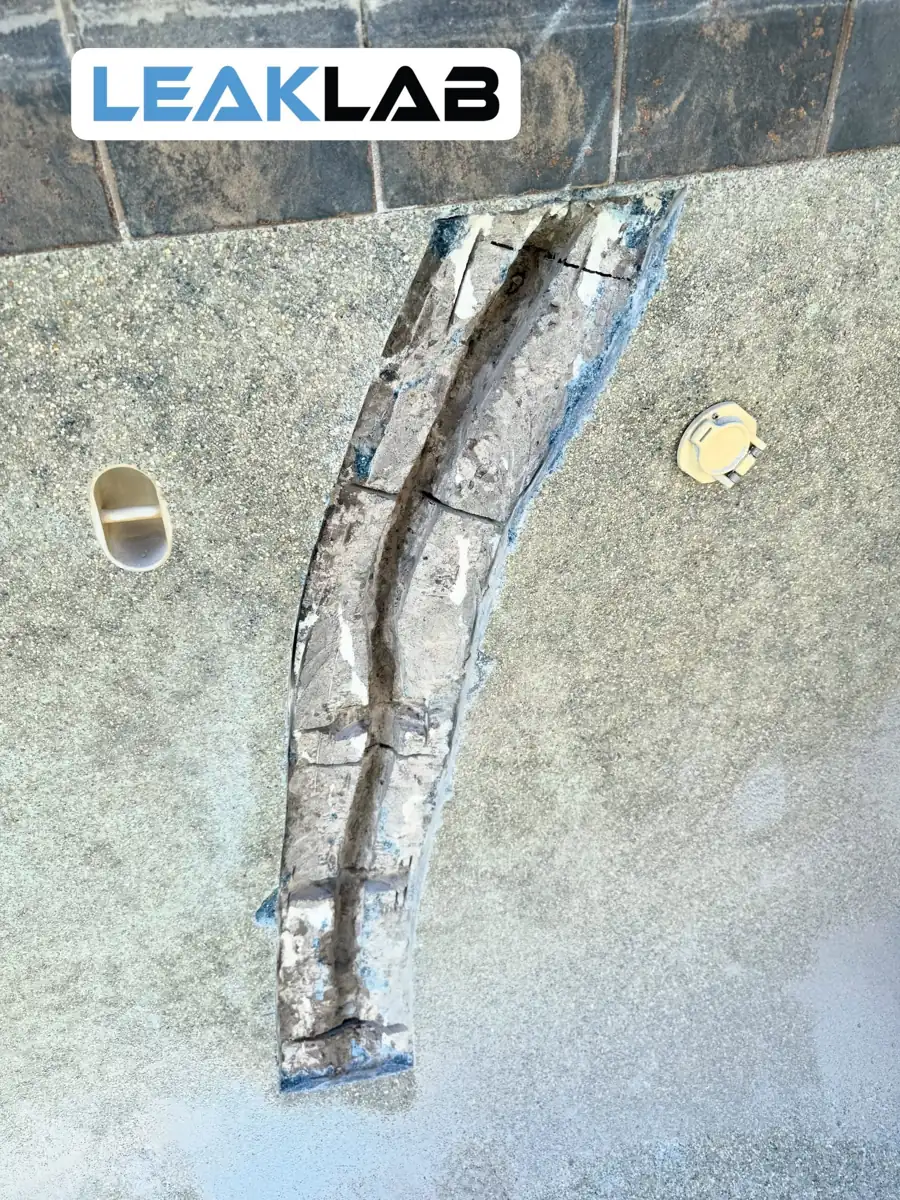
First, we cut the crack open along its full length. This is called chasing the crack. It removes the finish and the weak, broken material around the crack so we can see how deep it goes. It also gives the repair materials solid concrete to grab onto.
Step 2: Follow the Crack Into the Bond Beam and Tile Line
Next, we pulled the waterline tile above the crack. Sure enough, the crack kept going up into the bond beam, the thick concrete ring at the top of the pool wall. If we had stopped at the tile, we would have left part of the crack untouched. If you’ve spotted cracks in your pool tile line, this is one reason to have them checked.
Step 3: Staple the Pool Crack for Long-Term Strength
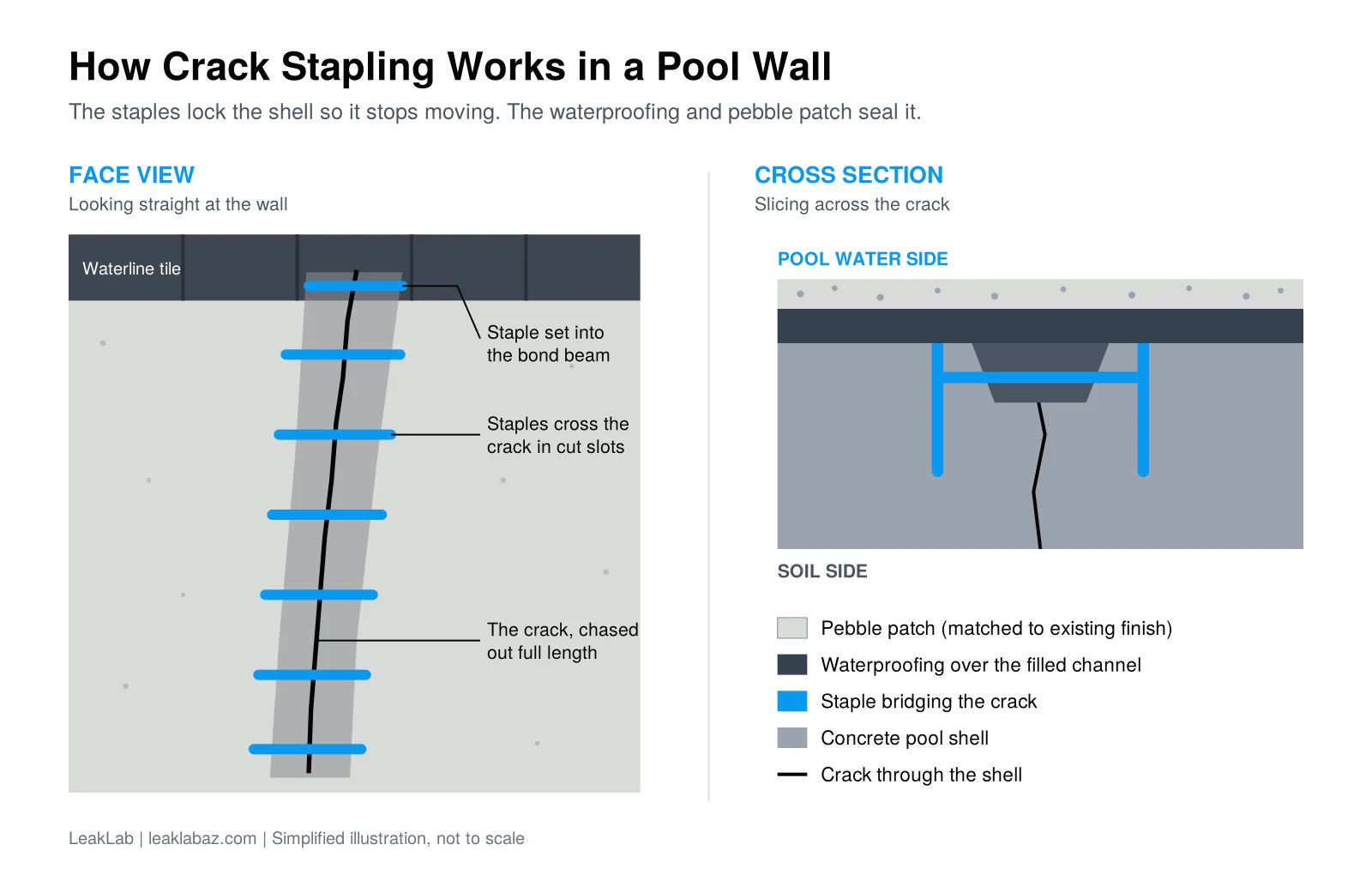
Then came the most important step. We cut slots across the crack and set heavy staples into them. The staples run from one side of the crack to the other, spaced along its full length. We also set one in the bond beam. Together, they stitch the two sides of the shell back into one piece.
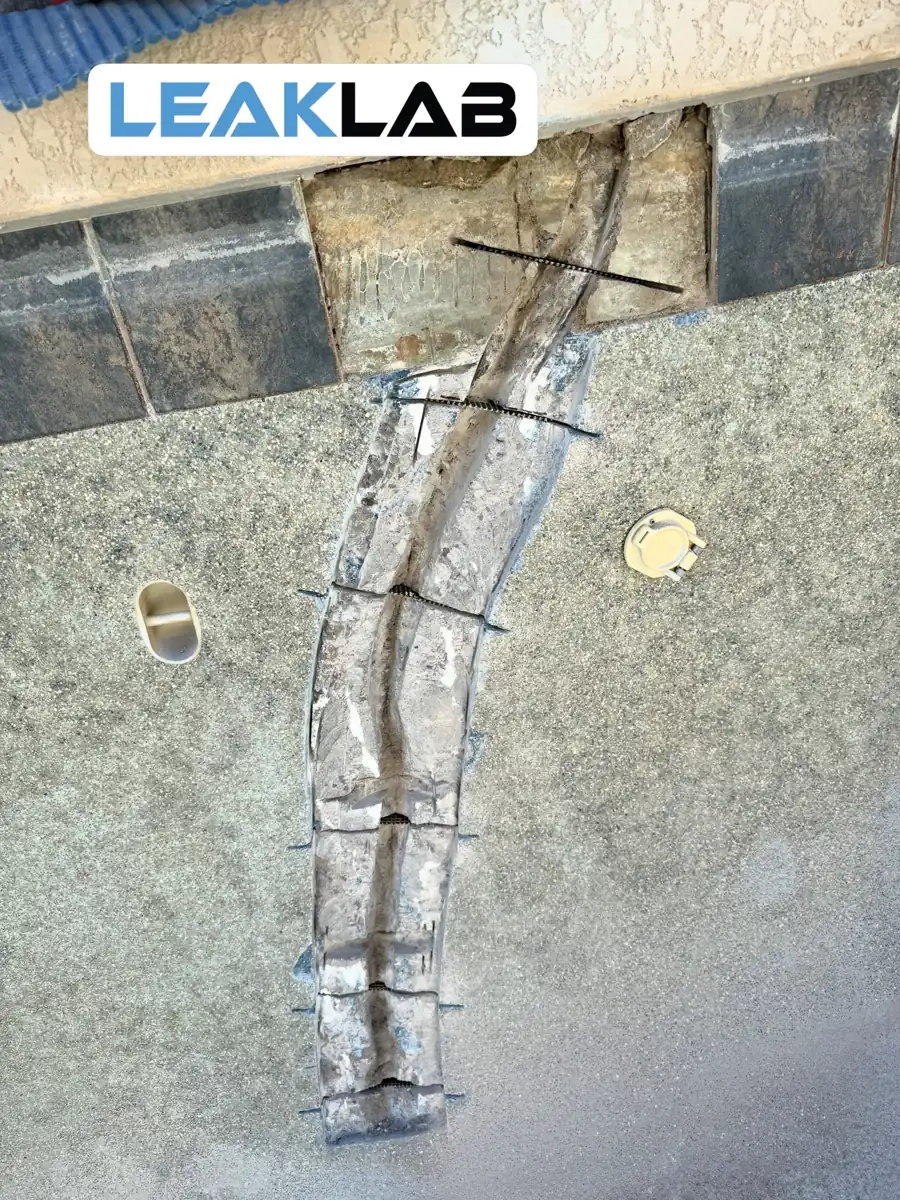
Stapling is what turns a patch into a long-term repair. In other words, the staples carry the load, so the sealant doesn’t have to.
Step 4: Waterproof the Repair Channel
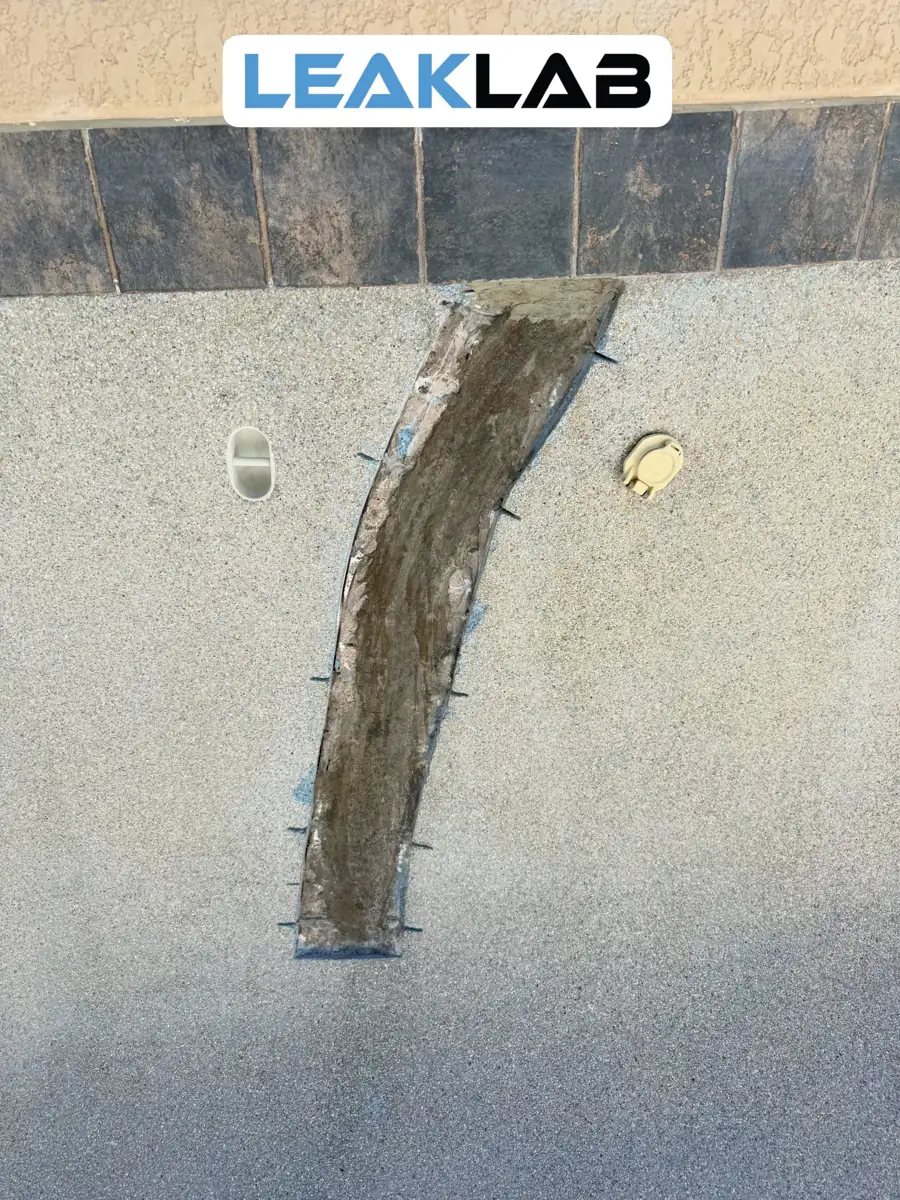
After that, we filled the chased channel and waterproofed it. This layer seals the crack so water can’t travel through the shell. You can see the dark gray waterproofed channel in the photo below, with the staple ends tucked in along the edges.
Step 5: Reset and Grout the Waterline Tile
With the beam repaired, we reset the waterline tile and grouted it. The tile line went back to looking like it did before, with clean, even grout joints.
Step 6: Finish With a Matching Pebble Patch
Finally, we applied a pebble patch over the repair, blending it into the existing finish. We got it to a pretty close match.
What to Expect From a Pebble Finish Pool Crack Repair
Every pebble finish pool crack repair comes down to one honest question: will the patch match? Here’s the truth. A new patch can get very close, but rarely perfect on day one. That’s because the original finish has been in the sun and the water for years. Its color and texture have shifted over time.
So on this job, we aimed for a pretty close match, and that’s what we delivered. In our experience, a fresh patch tends to soften as it weathers alongside the rest of the pool. We’d rather set that expectation up front than promise something no one can guarantee.
The good news is that a targeted patch costs far less than resurfacing the whole pool. As a result, you keep the finish you have and fix only what’s broken.
Why In-House Pool Crack Repair Matters
Doing the pool crack repair ourselves, from finding the crack to the final patch, is how we keep quality under control. Many companies find the problem and then hand the repair to someone else. That’s where shortcuts creep in.
For example, a sub might skip the staples to save time. Or they might patch the wall and never pull the tile to check the beam. Because we own every step, we can do it the right way the first time.
When we shared this job on Facebook, one comment summed it up simply: “Did a great job, quality results.” That’s the goal on every pool we touch.
Is Your Scottsdale Pool Showing Signs of a Crack?
Not every crack needs this level of pool crack repair, but some do. Watch for these signs:
- A crack that runs down a wall or across the floor, not just a fine surface web
- A crack that continues into the waterline tile
- Water loss beyond normal evaporation
- A crack that gets longer or wider over a few weeks
- Damp spots around the pool deck near the crack
If any of those sound familiar, start with pool leak detection in Scottsdale. We’ll confirm whether the crack is moving water, then tell you what it will take to fix it. You can also read more about how pool leaks get repaired in Scottsdale, or see our full approach to pool leak repair. When you’re ready, book an appointment and we’ll take a look.
Pool Crack Repair FAQs
These are the pool crack repair questions Scottsdale homeowners ask us most.
Can a crack in a pool be repaired?
Yes. Most cracks in a concrete pool can be repaired. Fine surface cracks often need only a sealant or patch. However, structural cracks that run through the shell need more. The lasting fix is to staple the crack, waterproof it, and then restore the finish, like we did on this Scottsdale pool.
How much does it cost to repair cracks in a pool?
It depends on the crack. Length, depth, and location all matter. A crack that runs into the tile line costs more, since the tile has to come off and go back on. Draining and refilling the pool also adds to the job. We give you a firm number once we’ve seen the crack in person.
What is the most effective sealant for repairing pool cracks?
For a fine, non-moving surface crack, a two-part pool epoxy or putty can work well. For a structural crack, though, no sealant works on its own. The shell keeps moving and the seal breaks. That’s why we staple structural cracks first, then waterproof them.
Is crack repair cheaper than resurfacing a pool in Arizona?
In most cases, yes. A targeted repair with a pebble patch fixes only the damaged area. Resurfacing replaces the finish on the whole pool. If the rest of your finish is in good shape, a crack repair is usually the smarter spend.
Do you have to drain the pool to fix a structural crack?
For a crack like this one, yes. Stapling, waterproofing, and pebble work need a dry wall. We plan the drain carefully, since an empty shell in Arizona heat needs to be handled with care. Smaller surface repairs can sometimes be done underwater.