In Mesa, Arizona, normal pool water loss is 1/4 inch to 1 inch per day due to evaporation — significantly higher than the national average of 1/4 inch per day. This is caused by Mesa’s extreme heat (105–115°F summers), very low humidity (20–30%), and over 299 sunny days per year. If your pool is losing more than 1 inch per day, or if loss continues at the same rate during cooler weather, you likely have a leak rather than normal evaporation.
This complete guide covers everything Mesa pool owners need to know: how to measure water loss, how to run the bucket test, what causes pool leaks in Arizona, how to reduce evaporation, and when to call a professional for leak detection on pools. If you are specifically noticing loss overnight, read our guide: Why Is My Pool Losing Water Overnight in Arizona?
The Short Answer: How Much Water Loss Is Normal in Mesa?
In Mesa, Arizona, it is normal for a pool to lose between 1/4 inch to 1 inch of water per day due to evaporation alone. During the peak of summer — when temperatures routinely exceed 110°F — daily evaporation can push toward the higher end of that range or beyond.
To put that in perspective, a typical Mesa pool can lose 3 to 7 inches of water per week during summer months — purely from evaporation. That can translate to hundreds of gallons per week.
If your pool is losing significantly more than 1 inch per day — or if water loss is consistent even in cooler weather — you may have a leak.
Mesa Pool Water Loss: Quick Reference
| Condition | Daily Loss | Action Needed |
|---|---|---|
| Normal Evaporation (Summer) | 1/4″ – 1″ | Monitor; top off as needed |
| Normal Evaporation (Winter) | Up to 1/4″ | Normal; no action required |
| Possible Leak | 1″ – 2″ | Perform the Bucket Test |
| Likely Leak | More than 2″ | Call LeakLab AZ immediately |
Why Pool Water Evaporation Is So High in Mesa, AZ
Mesa is located in the Sonoran Desert, one of the hottest and driest desert climates in North America. Several environmental factors combine to make pool water evaporation significantly higher here than the national average.
1. Extreme Heat
Mesa regularly sees summer temperatures between 105°F and 115°F. Heat is the primary driver of evaporation — the hotter the air and water surface, the faster water molecules escape into the atmosphere. Pool water in Mesa can reach temperatures of 90°F or more in summer, which dramatically accelerates evaporation even at night.
2. Very Low Humidity
Mesa averages relative humidity around 20–30% during most of the year (dropping even lower outside monsoon season). Low humidity means the air is “thirsty” for moisture, drawing water vapor out of your pool rapidly. In contrast, a pool in Miami with 80% humidity will lose far less water because the air is already saturated with moisture.
3. Intense Sunlight and UV Exposure
Mesa receives over 299 sunny days per year — among the most of any city in the U.S. Prolonged direct sunlight heats the water surface continuously and breaks down pool chemistry, requiring more frequent chemical adjustments and topping off. Solar exposure is a major contributor to above-average daily water loss.
4. Wind
Wind increases evaporation by continuously sweeping away the layer of humid air that sits just above the water surface, replacing it with dry desert air. Even a moderate desert breeze can double the rate of evaporation compared to still conditions.
5. Pool Usage and Activity
Splash-out from swimmers, pool toys, and water features all contribute to water loss that is easy to overlook. A busy pool with children playing can lose 1–2 inches of water per day from splash-out alone, on top of evaporation.
Evaporation vs. a Leak: How to Tell the Difference in Mesa
Because evaporation rates are naturally high in Mesa, many pool owners don’t realize they have a leak until it has cost them thousands of dollars in wasted water and chemical costs. The key is knowing how to distinguish normal evaporation from a leak.
The Bucket Test: Your First Step
The bucket test is the most reliable DIY method for distinguishing evaporation from a leak. Here is exactly how to do it:
- Fill a standard 5-gallon bucket with pool water to about 1 inch from the top.
- Place the bucket on the first or second step of your pool so it sits in the water.
- Mark the water level inside the bucket AND the pool water level on the outside of the bucket with a piece of tape or a permanent marker.
- Turn off your pool’s auto-fill valve if you have one.
- Leave the pool undisturbed for exactly 24–48 hours (no swimming).
- After the waiting period, measure the difference between the current water level and your marks — both inside the bucket and outside (pool level).
- Compare: If the pool lost significantly more water than the bucket, you likely have a leak. If the loss is the same or very close, it is evaporation.
Important note for Mesa pools: Run this test during cooler hours or on a day that is representative of your typical conditions. Extreme heat during a test day can skew results. Ideally run the test over a full 48-hour period for a more reliable reading.
Signs You Have a Leak — Not Just Evaporation
- Your pool loses more than 1 inch of water per day consistently
- Water loss continues at the same rate even during cool or cloudy weather
- You notice wet or soggy areas around the pool equipment pad
- There are visible cracks in the plaster, deck, or coping
- Your water bills have increased unexpectedly
- You are adding water more than twice per week in winter months
- The water level seems to stabilize at a specific point (often near a return jet or skimmer — a sign of a specific leak location)
How to Calculate Your Pool’s Actual Water Loss in Mesa
If you want to go beyond the bucket test and get a precise measurement of how much water your pool is losing, here is a step-by-step process.
Step 1: Measure Your Pool’s Surface Area
For a rectangular pool: multiply length × width. For a circular pool: use the formula π × radius². For freeform pools, use the manufacturer’s spec or estimate using a rough rectangular area.
Step 2: Measure Daily Water Drop (in inches)
Using a tape measure or a permanent marker on the pool wall, record the water level at the same time each day (early morning is ideal before the sun heats things up). Track this for 5–7 days.
Step 3: Calculate Volume Lost Per Day
Use this formula:
Gallons lost per day = Surface Area (sq ft) × Daily Drop (inches) × 0.6234
Example: A 15 × 30 ft pool (450 sq ft) losing 1/2 inch per day = 450 × 0.5 × 0.6234 = approximately 140 gallons lost per day. At Mesa water rates, that can add up to significant costs over a season.
Seasonal Pool Water Loss in Mesa: What to Expect Month by Month
Understanding how evaporation changes throughout the year in Mesa helps you set realistic expectations and catch abnormal loss sooner.
| Season / Month | Avg High Temp | Typical Daily Loss | Notes |
|---|---|---|---|
| Jan–Feb | 65–70°F | 1/8″ – 1/4″ | Lowest evaporation of year |
| Mar–Apr | 75–85°F | 1/4″ – 1/2″ | Evaporation rises quickly |
| May–Jun | 95–105°F | 1/2″ – 3/4″ | Pre-monsoon heat spike |
| Jul–Aug | 105–115°F | 3/4″ – 1″+ | Peak season; monsoon humidity may help slightly |
| Sep–Oct | 90–100°F | 1/2″ – 3/4″ | Still hot; humidity drops post-monsoon |
| Nov–Dec | 65–75°F | 1/8″ – 1/4″ | Cooler; much lower evaporation |
Common Causes of Pool Leaks in Mesa
When water loss exceeds normal evaporation rates, the culprit is almost always one of the following:
1. Plumbing Line Leaks
Underground PVC pipes can crack due to ground movement, age, or root intrusion. These are especially common in older Mesa neighborhoods. Because the pipes are buried, the leak may go undetected for months while thousands of gallons seep into the ground.
2. Structural Cracks
The intense heat and expansive clay soils common in the East Valley cause the ground to shift seasonally. This movement can crack pool shells, particularly in the floor, steps, and around fittings. Even a hairline crack can lose hundreds of gallons per day.
3. Skimmer and Main Drain Leaks
The plastic skimmer body can separate from the gunite pool shell over time, especially as the ground contracts and expands with Mesa’s temperature swings. A leaking skimmer is one of the most common leak sources detected by pool professionals in Arizona.
4. Return Jet and Light Fitting Leaks
Fittings that penetrate the pool wall — return jets, light niches, and vacuum ports — rely on gaskets and seals that degrade over time, particularly in UV-intense Arizona sun. Failed seals around these fixtures are a frequent source of slow leaks.
5. Equipment Pad Leaks
Leaks at the pump, filter, heater, or valves are usually visible as wet spots or water stains around the equipment pad. These are easier to detect but should be addressed promptly to prevent equipment damage.
What to Do If You Suspect a Pool Leak in Mesa
- Step 1 — Perform the bucket test. Confirm the loss is beyond normal evaporation.
- Step 2 — Check for visible signs. Walk the pool perimeter looking for cracks, wet soil, or loose fittings.
- Step 3 — Note where the water level stabilizes. If the level stops dropping at a certain point (e.g., at a return jet), that gives a clue to the leak location.
- Step 4 — Turn off the pump and retest. If water loss stops with the pump off, the leak is likely in the plumbing under pressure. If it continues, it may be a structural leak.
- Step 5 — Call LeakLab AZ. Our team uses electronic leak detection equipment, pressure testing, and dye testing to pinpoint leaks quickly and accurately — without unnecessary digging.
How to Reduce Pool Water Evaporation in Mesa
While you cannot eliminate evaporation, there are proven ways to significantly reduce it and cut your water costs in Mesa:
- Use a pool cover: A quality solar or safety cover can reduce evaporation by up to 95% when the pool is not in use. This is the single most effective strategy for Mesa pools.
- Install a liquid solar cover: Products like Natural Chemistry’s Cover Free create an invisible barrier on the water surface, reducing evaporation by 15–30% with minimal effort.
- Reduce water temperature: Heating your pool increases evaporation. If you use a heat pump or gas heater, consider lowering the set temperature by a few degrees.
- Add windbreaks: Fencing, hedges, or privacy screens around your pool reduce the wind that accelerates evaporation.
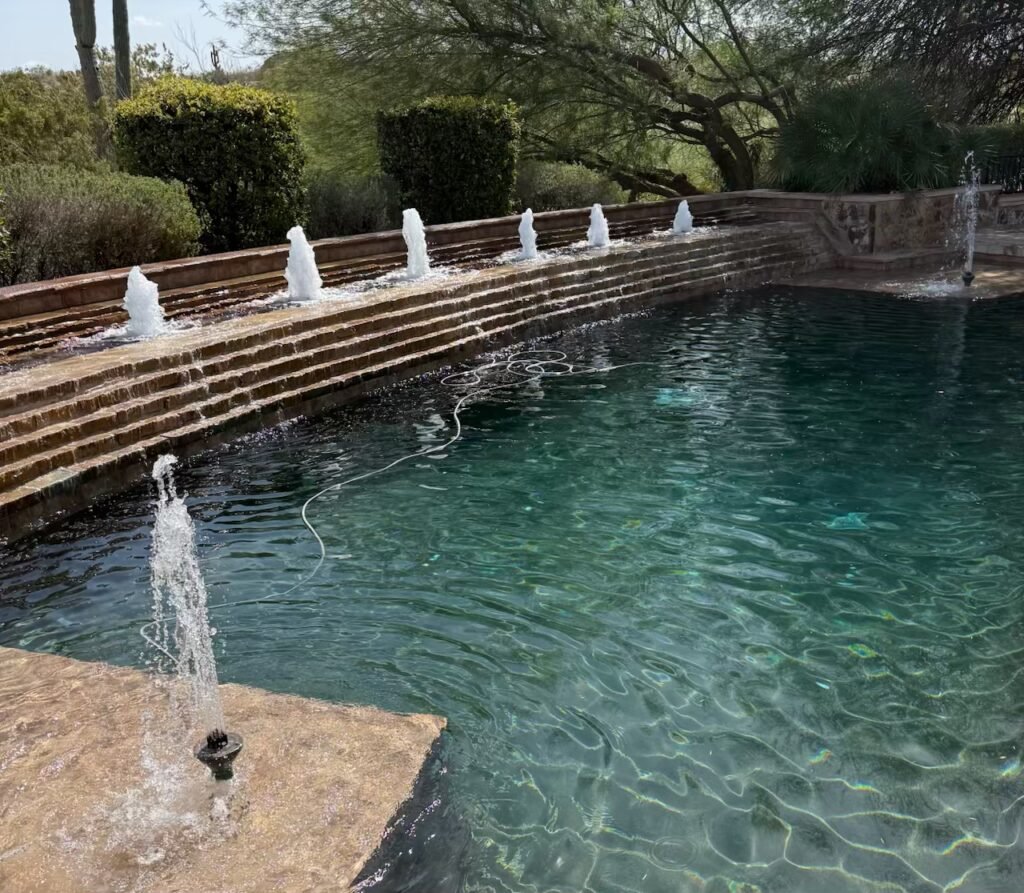
- Minimize water features at night: Waterfalls, bubblers, and fountains significantly increase the water surface area exposed to air, accelerating evaporation. Run these features only during the day.
- Schedule backwashing correctly: Avoid over-backwashing your filter. Only backwash when the pressure gauge rises 8–10 PSI above the clean baseline.
FAQs: Pool Water Loss in Mesa, Arizona
How much water loss is normal for a pool in Mesa per week?
In Mesa, it is normal to lose 2 to 7 inches of water per week from evaporation alone, depending on the season. During peak summer (June through August), losses can reach the higher end of that range. If your pool is losing more than 1 inch per day consistently, perform a bucket test or call a professional.
Is 1 inch of water loss per day too much for a Mesa pool?
During the hottest weeks of summer in Mesa, 1 inch per day is at the high end of what might be considered normal. However, if you consistently see 1 inch or more per day across different weather conditions — including cooler days — it warrants investigation. Run the bucket test and contact LeakLab AZ if you are unsure.
Does Mesa have mandatory water loss reporting for pools?
Mesa Water Resources does not currently require homeowners to report pool water loss, but the city does have water conservation guidelines. Undetected pool leaks are considered a significant source of residential water waste in the Phoenix metro area.
How do I know if my pool is leaking or just evaporating?
The bucket test is the most reliable DIY method. Place a filled bucket on your pool steps, mark both water levels, wait 24–48 hours without running the auto-fill, and compare the drop inside the bucket versus the pool. If the pool dropped more than the bucket, you likely have a leak.
Can I fix a pool leak myself?
Minor surface cracks and small plaster chips can sometimes be patched as a temporary fix, but underground plumbing leaks, structural cracks, and fitting failures require professional repair. Attempting to repair a hidden plumbing leak without proper leak location equipment often results in unnecessary digging and higher repair costs.
Does my pool lose water faster in monsoon season?
Interestingly, monsoon season (July–September) can slightly reduce evaporation because the higher humidity — sometimes reaching 40–60% — reduces the air’s capacity to absorb more moisture. However, you may also see water loss from heavy rain runoff splashing in or from pool overflow. Overall evaporation typically remains high due to the intense heat.
Why Mesa Pool Owners Choose LeakLab AZ for Leak Detection
LeakLab AZ specializes in pool leak detection throughout the Mesa, Chandler, Gilbert, Scottsdale, and greater Phoenix area. We understand the unique challenges that Arizona’s desert climate poses for pool owners — and we have the technology to find leaks fast, without guesswork.
- Advanced Electronic Detection: We use state-of-the-art electronic listening equipment and pressure testing to locate leaks in underground plumbing without unnecessary excavation.
- Dye Testing: Precise dye tests confirm the exact point of entry for structural and fitting leaks.
- Full Written Report: After every inspection, you receive a detailed report of findings and recommended repairs.
- Local Expertise: We know Mesa’s soil conditions, pool construction styles, and the specific failure points common in Arizona pools.
- Fast Scheduling: We offer prompt appointments — because in the Mesa summer, every day of water loss matters.