
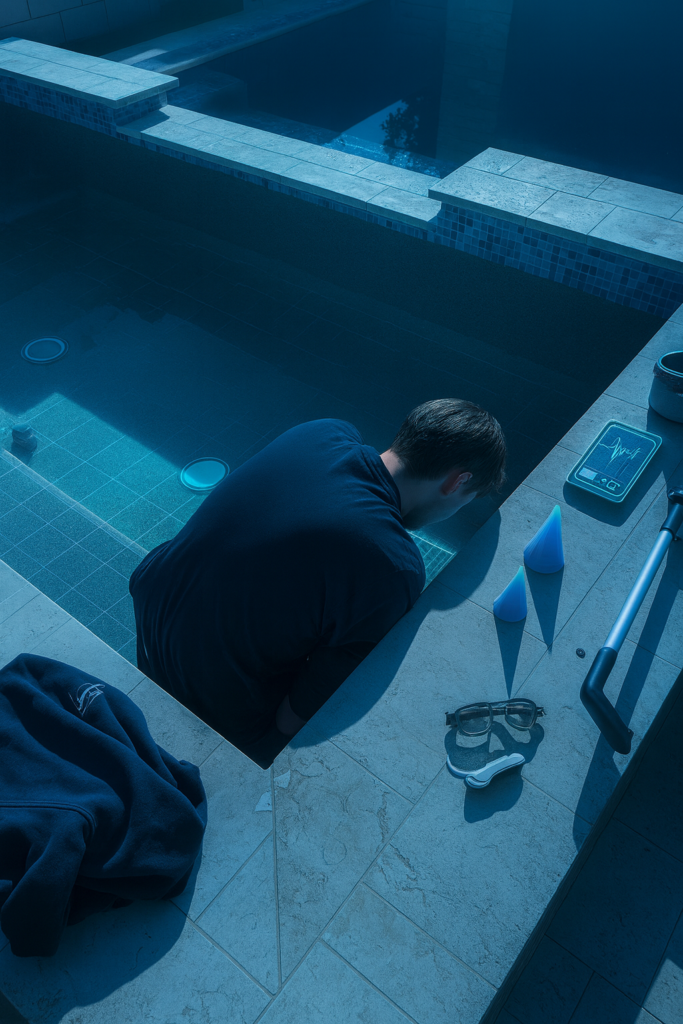
A Complete Guide for Mesa, AZ Homeowners | LeakLab AZ
If you own a pool in Mesa, Arizona, you’ve probably asked yourself: is pool leak detection actually worth paying for? Or can you just keep topping off the water level and hope the problem goes away on its own?
The honest answer is yes—professional pool leak detection is absolutely worth it in Arizona, and this guide breaks down every reason why. From the warning signs and what a professional inspection involves, to how Arizona’s unique climate makes leaks worse and what you can do to prevent them, you’ll find everything you need to make an informed decision.
Mesa’s desert climate and geology create conditions that make pool leaks more likely—and more damaging—than in most other parts of the country. When a leak goes undetected, you’re not just losing water. You’re facing escalating water bills, structural damage, landscaping loss, and a repair scope that grows every single week you wait.
What You’ll Find in This Guide
- What Is Pool Leak Detection?
- Why Pool Leaks Are a Bigger Problem in Mesa, AZ
- Is Pool Leak Detection Worth It? (The Real Case)
- 10 Warning Signs Your Mesa Pool Is Leaking
- What Factors Affect the Scope of a Leak Inspection?
- DIY vs. Professional Leak Detection: What Actually Works
- What Happens During a Professional Inspection?
- Types of Pool Leak Repairs in Mesa, AZ
- How to Prevent Pool Leaks in Arizona’s Climate
- FAQ: Pool Leak Detection in Arizona
1. What Is Pool Leak Detection?
Pool leak detection is the process of finding exactly where water is escaping from your swimming pool—whether from the shell, underground plumbing, fittings, equipment, or light fixtures. Unlike a burst pipe inside your home where the damage is immediately visible, pool leaks are notoriously hard to locate. They’re often underground, hidden beneath decking, or too small to see without specialized equipment.
Professional pool leak detection uses a combination of techniques to pinpoint every escape point:
- Pressure testing of individual plumbing lines to identify which section is losing water.
- Electronic geophone listening to detect the sound of escaping water underground—even through inches of concrete.
- Dye testing near fittings, lights, skimmers, and return jets to identify surface-level leak points.
- Pipeline camera inspection inserted directly into pipes for a visual confirmation of cracks or collapses.
- Helium tracer gas testing for the deepest or most difficult-to-locate underground leaks.
A thorough professional won’t stop at the first leak they find. The goal is to identify every single leak present so repairs are complete and the problem doesn’t resurface two weeks later.
2. Why Pool Leaks Are a Bigger Problem in Mesa, AZ
Arizona—and the East Valley in particular—presents a uniquely harsh environment for pools. Several local factors make leaks more likely here than in most other U.S. markets:
- Extreme Heat: Mesa routinely hits 110°F+ in summer. Repeated thermal expansion and contraction stresses pool shells, plaster, and fittings, creating micro-cracks that worsen over time.
- Expansive Clay Soils: Much of the Maricopa County valley floor sits on expansive clay that swells with moisture and contracts when dry. Monsoon season followed by long dry spells causes dramatic soil movement that stresses the pool shell and underground plumbing.
- Hard Water Corrosion: Mesa’s water supply is notoriously high in calcium and mineral content. Over time, hard water corrodes fittings, O-rings, and seals—creating leak points at equipment connections and return lines.
- High Evaporation Masking Leaks: Normal evaporation in Mesa’s desert air removes water from your pool every week. This makes it easy to dismiss real water loss as “just evaporation”—delaying detection for months.
- Monsoon Hydrostatic Pressure: Arizona’s late-summer storms saturate soil rapidly, creating hydrostatic pressure against the pool shell that can force existing micro-cracks wider overnight.
The result: pools in Mesa and across the East Valley develop leaks more frequently than pools in less extreme climates. And when they do, the arid conditions can mask the signs long enough for minor issues to become major structural damage.
Water conservation is another critical local factor. Arizona is in a prolonged drought, and the Colorado River system that supplies much of the Valley’s water has been at historically stressed levels. The EPA estimates that undetected pool leaks waste an average of 8,000 to 14,000 gallons per pool annually. In a state where conservation is increasingly a civic priority, fixing a leak is both financially and environmentally responsible.
3. Is Pool Leak Detection Worth It? (The Real Case)
This is the core question—and the answer is a clear yes. Here’s how to think about it.
A pool leak is never static. It starts small and grows. What begins as a hairline crack or a failing O-ring quietly becomes a structural problem, a landscaping nightmare, or a dramatically higher water bill over the course of a season. The longer detection is delayed, the broader the scope of the eventual repair.
Detection, by contrast, is a bounded, one-time service. A professional comes out, finds every leak present, and gives you a complete picture. From that point, you know exactly what you’re dealing with and can make informed decisions about repair. Without detection, you’re guessing—and guessing at the wrong source means paying to fix the wrong thing.
| Leak Type | Annual Water Loss | Damage Severity if Left Undetected |
| Minor surface crack | 2,000–5,000 gallons | Low — surface repair, manageable scope |
| Plumbing line leak | 8,000–15,000 gallons | Moderate to high — soil erosion, landscaping damage |
| Structural shell failure | 20,000+ gallons | Severe — foundation risk, major repair or replacement |
Source: HomeGuide 2025 National Pool Repair Survey
As the table illustrates, even a moderate plumbing line leak silently wastes thousands of gallons per year while quietly undermining the soil beneath your deck. A structural failure caught late is one of the most disruptive and extensive repairs a pool owner can face—often requiring significant excavation, re-engineering, and resurfacing.
What happens when homeowners wait? A 2025 Thumbtack survey of Arizona pool professionals found that 72% of pools showing leak symptoms go undiagnosed until significant damage has already occurred. Homeowners who delay consistently face broader, more disruptive repairs than those who acted at the first sign.
For a full overview of how we approach every inspection, visit our leak detection on pools service page—we explain exactly what’s included in a LeakLab inspection and what you can expect.
The bottom line: Professional pool leak detection is worth it in Arizona. A single inspection gives you certainty, stops ongoing water waste, and prevents a small problem from compounding into a large one.
4. 10 Warning Signs Your Mesa Pool Is Leaking
Knowing when to call a professional starts with knowing what to watch for. Here are the 10 most common signs of a pool leak in the Mesa area:
- Water Loss Greater Than Normal Evaporation: In Mesa, evaporation accounts for roughly 1/4 to 1/2 inch of water loss per week. Consistent daily drops beyond that—especially when the pool isn’t being used heavily—are a red flag. The bucket test (described in Section 6) is the best way to confirm.
- Unexplained Spike in Your Water Bill: A sudden jump in your City of Mesa utility bill, without a clear explanation like houseguests or filling the pool, strongly suggests water is escaping somewhere it shouldn’t be.
- Soggy Ground or Wet Spots Near the Pool: Damp soil, soft ground, or erosion near the pool deck, equipment pad, or surrounding landscaping—especially during dry periods—is a classic sign of an underground plumbing leak.
- Cracks in the Deck, Coping, or Tiles: Fissures in concrete decking or coping, particularly after monsoon season, can indicate that soil movement caused by an underground leak has undermined structural support beneath the surface.
- Air Bubbles in the Return Jets: Bubbles coming from your return lines while the pump runs means air is being pulled into the suction side—a direct indicator of a suction-line plumbing leak.
- Auto-Fill Running Constantly: If your automatic fill valve runs more frequently than normal or seems to never stop, it’s compensating for lost water. A pool in good condition should not need to constantly refill itself.
- Loose or Lifting Pool Tiles: Escaping water creates hydrostatic pressure behind the pool shell that pushes tiles away from the surface. Loose or popped tiles are often a late-stage symptom of an active leak.
- Persistent Algae Despite Chemical Treatment: A continuous leak dilutes pool chemicals and introduces fresh water or sediment, making it nearly impossible to maintain proper water balance and leaving you with recurring algae problems.
- Pump and Equipment Running Harder: If your pump sounds like it’s working harder, losing prime more often, or cycling more frequently, it may be struggling to compensate for water lost through a suction-side leak.
- Sinkholes or Soft Spots in the Deck: Hollow sounds when walking on the concrete near your pool, visible voids, or soft spots in the decking mean a long-term underground leak has washed away the supporting soil beneath your slab—one of the most serious signs of an advanced leak.
If any of these signs sound familiar, don’t wait for multiple symptoms to appear. Pool leaks don’t resolve on their own—they grow. Contacting a licensed Mesa pool leak detection company as soon as you notice one sign is the smartest move you can make.
5. What Factors Affect the Scope of a Leak Inspection?
No two pool leak inspections are identical. The scope of work—and therefore the time and effort involved—varies based on your pool’s unique characteristics. Understanding what goes into an inspection helps you know what to expect when you schedule one.
The key factors that affect how complex a leak inspection will be include:
- Pool size and shape: Larger pools have more surface area, more plumbing runs, and more potential leak points to evaluate.
- Attached spa or water features: A pool with an attached spa, waterfall, grotto, or bubblers has additional plumbing circuits and fittings that each need to be tested individually.
- Age of the plumbing: Older pools are more likely to have multiple leak sources, and aging PVC can be more fragile to pressure test—requiring a more careful, methodical approach.
- Pool construction material: Gunite and plaster pools, fiberglass pools, and vinyl liner pools each have different common failure points that technicians prioritize differently during inspection.
- Accessibility: Underground plumbing buried beneath a thick concrete deck or landscaping requires more advanced detection methods than easily accessible above-ground fittings.
- Number of suspected vs. confirmed leak locations: A pool with multiple symptoms in different areas may require the full suite of detection tools—pressure testing, electronic listening, camera inspection, and dye testing—rather than a targeted single-method check.
The best approach is to have a professional assess your specific pool rather than assume one method will cover everything. A reputable detection company will tell you upfront what methods they’ll use and why, based on your pool’s layout and symptoms.
6. DIY vs. Professional Leak Detection: What Actually Works
There are a few legitimate DIY methods that can help you gather initial information before calling a professional. Here’s an honest assessment of what works and what doesn’t:
The Bucket Test (Best Free DIY Method)
Fill a 5-gallon bucket with pool water to match the current pool level. Mark both levels with tape. Turn off the auto-fill and any waterfalls. After 24 hours, compare the drops. If the pool has lost significantly more water than the bucket, you have a leak—not just evaporation. This is free, accessible, and a genuinely useful first step.
Dye Testing
A few drops of dark food coloring or specialized pool dye applied near light fixtures, return jets, skimmers, and visible cracks (with the pump off) can reveal suction-side leak points—dye will be pulled toward the opening. This works for visible surface areas but cannot reach underground plumbing.
The Limits of DIY Detection
DIY methods work reasonably well for confirming that a leak exists and for catching obvious surface-level issues. But they top out at roughly 60 to 75% accuracy and cannot detect underground plumbing failures, hairline cracks behind fittings, or pressurized return-line leaks.
The real danger of stopping at DIY is misdiagnosis. When a homeowner identifies the wrong leak source and pays to repair it, the actual leak continues. The repair was wasted, and now there’s a second service call on top of it. Professional detection eliminates that risk by using equipment that can actually hear and locate water escaping underground—something no household test can replicate.
7. What Happens During a Professional Pool Leak Inspection?
If you’ve never hired a pool leak detection company before, here’s exactly what the process looks like from start to finish:
- Initial Assessment: The technician reviews your pool’s symptoms, history, and layout—asking about water loss rate, when you first noticed issues, and whether you have a spa, water features, or recent repairs.
- Water Loss Confirmation: If not already confirmed, the tech runs a bucket or sticker test to verify your rate of water loss. Losing more than 1/4 inch per day confirms a leak is active.
- Pressure Testing: Individual plumbing lines are plugged off and pressurized. A pressure drop in a specific line directly identifies where water is escaping underground.
- Electronic Listening: Using a geophone, the technician scans the deck and surrounding ground to hear the sound of water escaping underground—even through several inches of concrete or compacted soil.
- Dye and Visual Testing: Fittings, lights, skimmers, the main drain, and return jets are all checked with dye to identify surface-level leak points throughout the pool.
- Camera Inspection (If Needed): For suspected internal pipe damage, a fiber optic camera is inserted into the plumbing lines to visually confirm cracks, collapses, or joint failures.
- Full Report and Next Steps: After all tests are complete, you receive a full report of every leak found and its precise location. A thorough company tests everything—not just the first leak found—so you have the complete picture before any repair decisions are made.
For a standard Mesa residential pool, this process typically takes two to four hours. Complex pools with spas and multiple water features may take longer. The thoroughness of the process is what makes the diagnosis accurate and actionable.
8. Types of Pool Leak Repairs in Mesa, AZ
Once leaks are located, the repair approach depends on where the leak is and how extensive the damage has become. Here’s an overview of the most common repair types Mesa pool owners encounter:
| Repair Type | Complexity | Notes |
| Epoxy or patch (small crack) | Low | Often same-day; no draining required in many cases |
| Skimmer or fitting repair | Low to moderate | Common in pools that are a decade or older |
| Spot plumbing repair (PVC) | Moderate | Trenchless options available to preserve landscaping |
| Pipe rerouting | Moderate to high | Bypasses severely damaged sections of underground plumbing |
| Full replumbing | High | Rare; reserved for extensively degraded plumbing systems |
| Pool resurfacing (plaster) | High | Addresses widespread surface deterioration and porosity |
| Structural shell repair | High | Required for severe cracking or soil subsidence damage |
Complexity ratings reflect typical labor, time, and access requirements — not a substitute for a professional assessment.
The most important factor in determining repair complexity is how early the leak was caught. Leaks identified at the surface-crack or minor-fitting stage are almost always resolved with straightforward, minimally invasive techniques. Leaks that have been active for months or years—eroding soil, shifting the deck, and weakening the shell—require a much broader repair scope.
Modern trenchless repair technology has been a significant advancement for Mesa pool owners specifically. Rather than excavating your yard and deck to reach underground pipes, many plumbing leaks can now be repaired with minimally invasive techniques that preserve your landscaping. This approach has become the standard for reputable companies in the Phoenix metro area.
9. How to Prevent Pool Leaks in Arizona’s Climate
Prevention is always preferable to repair. Following a consistent maintenance routine can reduce your leak risk by up to 60%, according to industry data. Here’s a practical checklist tailored to Mesa’s climate:
Monthly Tasks
- Monitor your pool’s water level weekly and log it—catching abnormal drops early is the single best thing you can do.
- Visually inspect around the equipment pad and deck for wet spots, soft ground, or erosion.
- Listen for unusual pump sounds—gurgling or air noise—that suggest a suction-side issue.
- Confirm your auto-fill valve isn’t running constantly or more than expected.
Quarterly Tasks
- Inspect all fittings, O-rings, and gaskets around the pump, filter, and heater for any sign of dripping.
- Check expansion joints in the pool deck for cracking or separation.
- Clean and inspect the skimmer basket and throat for hairline cracks.
- Test your auto-fill system to verify it’s not masking an active water loss.
Annual Tasks (Pre-Monsoon Recommended)
- Schedule a professional pressure test of all plumbing lines before monsoon season when soil movement is most likely.
- Reseal expansion joints if they show cracking—gaps will be exploited by soil shifts during summer storms.
- Resurface if plaster or the pool finish shows widespread chipping, staining, or rough texture.
- Replace aging O-rings, valves, and seals on equipment before they fail.
- Have water chemistry professionally tested and balanced to prevent mineral buildup and corrosion that degrades fittings over time.
10. FAQ: Pool Leak Detection in Arizona
Here are the most common questions Mesa homeowners ask about pool leak detection—answered directly.
How much water loss is normal for an Arizona pool?
In Mesa and the greater Phoenix area, normal evaporation accounts for roughly 1/4 to 1/2 inch of water loss per week in summer. Consistent daily loss beyond that should be investigated as a potential leak. Use the bucket test described in Section 6 to get a clear baseline.
Can I use homeowner’s insurance to cover a pool leak?
It depends on your policy and the cause. Sudden, accidental damage—like a pipe burst—may be covered. Gradual wear and tear typically is not. A professional leak detection company can provide detailed documentation that helps support a valid insurance claim if the damage qualifies.
How long does pool leak detection take?
A thorough professional inspection for a standard Mesa residential pool takes two to four hours. More complex pools with spas and multiple water features take longer. Any company promising a complete inspection in 30 minutes is cutting corners—and a missed leak means you’ll need a second service call.
Will the repair require draining my pool?
Not necessarily. Many common repairs—epoxy patching, fitting replacements, and many plumbing fixes—can be completed without fully draining the pool. Experienced companies will avoid draining unless it’s absolutely required, reducing both disruption and turnaround time.
How often should I have my pool professionally inspected for leaks?
Most pool professionals recommend a full leak inspection every one to two years, timed to late spring before monsoon season when soil movement is most likely to cause or worsen leaks. Pools over 10 years old benefit from annual inspections given the increased risk of aging plumbing and fittings.
Is it safe to swim in a pool that might be leaking?
Generally yes for minor leaks, though it depends on severity. A small shell or surface leak doesn’t create an immediate safety hazard. However, if you suspect a structural failure, see sinkholes forming near the pool, or have any reason to think a leak is near an electrical component like a pool light, avoid the pool until it has been inspected and cleared.
What’s the difference between a pool crack and a pool leak?
A pool crack is a visible fissure in the shell, plaster, or deck. A pool leak is any point where water is actively escaping—which often happens at fittings, plumbing joints, and light fixtures rather than visible cracks. Not all cracks cause active leaks, and many active leaks have no visible cracks at all.
The Bottom Line: Is Pool Leak Detection Worth It in Arizona?
Yes—unequivocally. For Mesa homeowners, professional pool leak detection is one of the smartest decisions you can make for your pool and your property. A single inspection gives you certainty: you know exactly what’s leaking, where it is, and what needs to be fixed. Without it, you’re losing water every day, the damage is growing, and any repair you attempt is a guess.
The signs are often subtle at first—a slightly higher water bill, a patch of damp ground, an auto-fill that runs a little too often. By the time the damage is obvious, the scope of repair has already grown significantly. Early detection, by contrast, keeps most issues manageable and minimally invasive.
At LeakLab AZ, we specialize in finding and fixing pool leaks throughout Mesa, Gilbert, Chandler, Tempe, Queen Creek, and the surrounding East Valley. Our licensed technicians use the full range of professional detection technology to locate every leak—not just the obvious ones. Learn more about our team and our approach on our About LeakLab page, or visit our leak detection on pools service page to see exactly what a LeakLab inspection includes.
Don’t wait until a small drip becomes a structural problem. If you’ve noticed any of the warning signs in this guide, contact LeakLab AZ today for a professional inspection. Protect your investment, conserve Arizona’s water, and get back to enjoying your pool.
— LeakLab AZ | Mesa’s Pool Leak Detection Specialists —