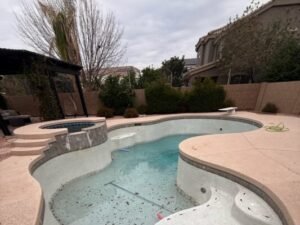
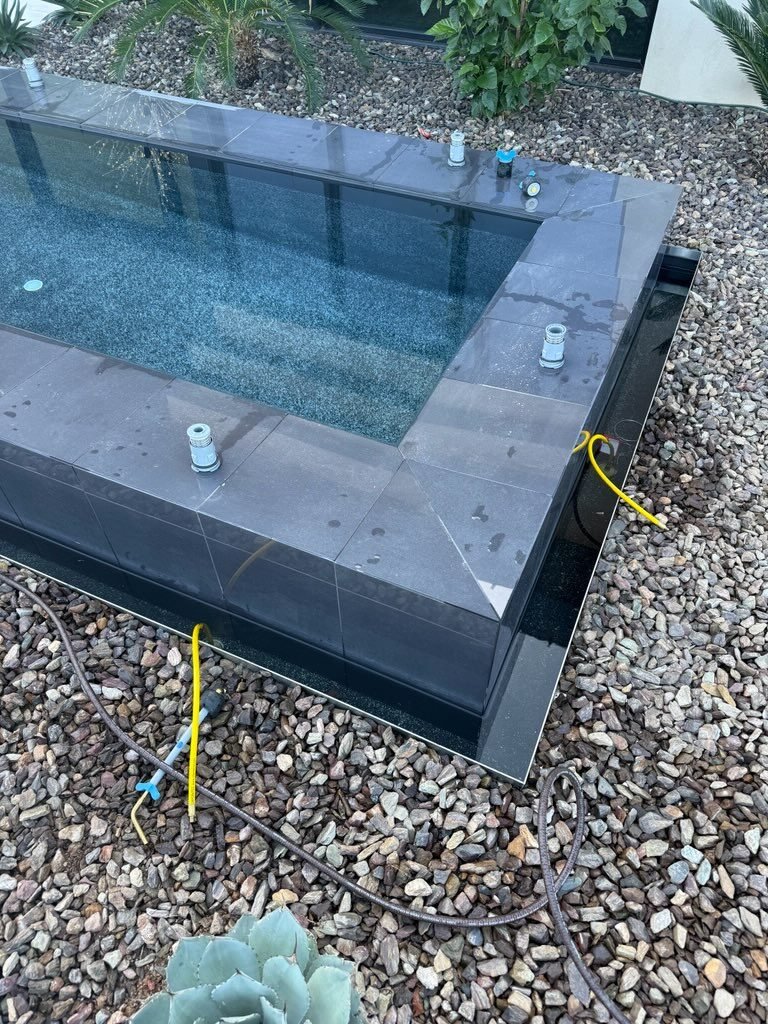
You wake up, walk out to your backyard in Mesa, and notice your pool water level is lower than it was yesterday. It happens again the next morning and the morning after that. You start to wonder: why is my pool losing water overnight in Arizona?
You’re not alone. This is one of the most common concerns we hear from pool owners across Mesa, Chandler, Gilbert, and the greater East Valley. The good news: not all overnight pool water loss means disaster. The bad news: some of it absolutely does — and ignoring it can cost you thousands.
This guide will walk you through every reason your pool could be losing water overnight in Arizona’s unique climate, how to tell the difference between evaporation and a leak, what the bucket test is and how to do it, and when to call a professional leak detection specialist.
1. How Much Water Should a Pool Lose Overnight in Arizona?
Here is the baseline every Mesa pool owner needs to know:
Normal pool water loss in Arizona: ¼ inch to ½ inch per day.
That’s higher than the national average of ¼ inch per day — and for good reason. Arizona’s extreme heat, low humidity, and abundant sunshine all accelerate evaporation far beyond what homeowners in cooler, more humid states experience.
To put that in perspective, a standard 15×30-foot pool losing just ¼ inch per day is losing roughly 500–700 gallons per week to evaporation alone. Over the course of a year, that can exceed 10,000–15,000 gallons — just from normal evaporation.
If your pool is losing more than ½ inch per day, something is wrong. A drop of 1 inch or more overnight is a serious red flag that almost always points to a leak.
2. Why Arizona’s Climate Makes Pool Water Loss Worse
Mesa sits in the Sonoran Desert, where conditions are uniquely hostile to pool water retention. Understanding the local climate is critical to answering the question: why is my pool losing water overnight in Arizona?
Extreme Heat
Summer temperatures in Mesa regularly exceed 110°F. The hotter the air and pool surface, the faster water molecules escape into the atmosphere. During peak summer months (June through September), evaporation rates can be significantly higher than in cooler months.
Low Humidity
Arizona’s desert air is chronically dry. The drier the surrounding air, the faster moisture is pulled from any water surface — including your pool. High-humidity climates like Florida actually experience slower evaporation despite also having high heat.
Intense Sun Exposure
Mesa receives over 300 days of sunshine per year. Direct, prolonged UV exposure heats pool water and dramatically increases the evaporation rate throughout the day — and the warm water continues releasing vapor well into the evening.
Monsoon Season Surprises
From roughly July through September, Arizona’s monsoon season brings brief but intense storms. Homeowners often mistake monsoon rain-filled water for normal levels — then panic when levels drop quickly afterward. Monsoon rains can also mask ongoing leak problems by topping off the pool naturally.
Year-Round Pool Use
Unlike pools in northern states that are closed for winter, Mesa pools stay open all year. That means 365 days of potential water loss — from both evaporation and undetected leaks.
3. The Two Main Causes: Evaporation vs. Leak
Every case of overnight pool water loss falls into one of two categories — or a combination of both.
Evaporation
Evaporation is a natural, continuous process that affects every outdoor pool. In Arizona, it’s dramatically accelerated by high temperatures, low humidity, direct sun exposure, wind, and running water features like waterfalls or fountains. Evaporation is not a sign of a problem — it’s a fact of life for Arizona pool owners. The goal is to manage it.
Leaks
A pool leak means water is physically escaping through a crack, break, failed seal, or plumbing failure. Leaks can occur in the pool shell, vinyl liners, skimmer bodies, return line fittings, underground plumbing, or pool equipment. Unlike evaporation, leaks do not slow down. They often get worse over time as water erodes surrounding soil, widening cracks and undermining the pool’s structural foundation.
4. Signs You Have a Pool Leak (Not Just Evaporation)
How do you know when your pool water loss crosses the line from normal evaporation into leak territory? Watch for these warning signs.
Water Loss Red Flags
- Losing more than ½ inch of water per day
- Water level drops even when the pool is covered
- Water loss increases when the pump is running
- Water loss continues during cool or overcast periods
Physical Signs Around the Pool
- Wet spots, soggy soil, or standing water around the pool deck
- Cracks in the pool deck or coping
- Tiles separating or falling off the waterline
- The pool shell appears to be shifting or settling unevenly
- Visible cracks inside the pool walls or floor
Equipment and Plumbing Signs
- Air bubbles coming from return jets
- The pump loses prime frequently or runs dry
- Water pooling around equipment pads
- Unusual drops in water when the pump cycles on vs. off
- Constantly running autofill valve
If you’re checking off multiple items on this list, stop adding chemicals and start investigating for a leak.
5. The Bucket Test: How to Do It Step-by-Step
The bucket test is the gold standard DIY method for determining whether your overnight pool water loss is evaporation or a leak. It’s simple, reliable, and costs nothing.
What You Need
- A 5-gallon bucket
- A heavy object (a rock or brick)
- Waterproof tape or a permanent marker
Step-by-Step Instructions
1. Fill the bucket with pool water until it’s about 2–3 inches from the top.
2. Place the bucket on a pool step (not on the deck) so it’s partially submerged. The water inside the bucket should be at the same level as the pool water.
3. Place the heavy object in the bottom of the bucket so it doesn’t float or tip.
4. Mark the water level inside the bucket with waterproof tape or a marker. Also mark the pool water level on the pool wall.
5. Leave the bucket undisturbed for 24–48 hours. Turn off autofill, waterfalls, and fountains during the test period.
6. Compare the levels after the test period.
Interpreting Your Results
- Both dropped the same amount: The water loss is due to evaporation. No significant leak is present.
- The pool dropped more than the bucket: You likely have a leak. The greater the difference, the more significant the leak.
- The pool dropped significantly more with the pump running: The leak may be in the plumbing or equipment rather than the shell.
Pro Tip for Mesa Homeowners: Run the test twice — once with the pump running and once with it off. If you lose more water with the pump on, the leak is likely in the plumbing or equipment. If loss is equal either way, the leak is more likely in the shell.
6. Common Sources of Pool Leaks in Mesa
Arizona’s geological and climatic conditions create specific leak vulnerabilities. Here are the most common places pool leaks originate in the Mesa area.
Skimmer Leaks
The skimmer is one of the most common leak locations in any pool. Mesa’s intense heat accelerates deterioration of the skimmer body and its connection to the pool shell. As gunite or plaster expands and contracts through extreme temperature cycles, the joint between the skimmer and pool wall can crack and separate — allowing significant water loss even through small gaps.
Underground Plumbing Leaks
Underground PVC plumbing is vulnerable to shifting soil — a real concern in Arizona, where clay-heavy soils expand and contract dramatically with temperature and moisture changes. Joints can separate and pipes can develop hairline cracks that worsen over time. These require pressure testing or electronic leak detection equipment to locate.
Return Line Fittings
The fittings where return lines meet the pool wall are sealed with gaskets and often epoxy. Sun exposure, chemical exposure, and thermal cycling can degrade these seals. A leaking return fitting can be deceptively small but allow continuous water loss.
Pool Shell Cracks
Gunite pools (the most common type in Mesa) are susceptible to structural cracks from ground movement, improper construction, or aging plaster. Even hairline cracks can allow water to seep through to the soil beneath. Larger structural cracks in the gunite itself can result in significant ongoing leaks.
Main Drain
The main drain at the bottom of your pool is another common failure point. The cover, housing, and associated plumbing can all develop leaks — and because it’s at the deepest point of the pool, even a small leak here can result in noticeable water loss.
Spa-to-Pool Bond Beam
If your pool has an attached spa, the connection between the two is a common leak location. The bond beam can crack, and check valves controlling flow between them can also fail.
7. Can Pool Equipment Cause Overnight Water Loss?
Absolutely — and this is often overlooked by homeowners trying to diagnose the problem themselves.
Pump and Filter Housing
O-rings, gaskets, and seals inside the pump and filter housing deteriorate in Arizona’s heat. Even a slow drip from pump fittings can result in significant overnight loss.
Backwash Line
If your multiport valve is not sealing completely, water can slowly drain through the backwash line when the pump is off. Check for moisture or water flow at the end of your backwash line.
Heater
Pool heaters have internal heat exchangers that can corrode and crack over time, particularly in pools where chemical balance is neglected. A leaking heat exchanger can send water directly to the ground beneath the equipment pad.
Autofill Valve
A malfunctioning autofill system can mask a leak for months — the valve keeps refilling the pool to the set level, and you never notice the water loss until your water bill spikes. If your autofill seems to run constantly, investigate for a leak immediately.
8. How to Reduce Pool Evaporation in Arizona
While you can’t stop evaporation entirely, Mesa pool owners have several effective tools to slow it down significantly.
Pool Covers
A pool cover is the single most effective way to reduce evaporation. A cover can reduce evaporation by up to 95%. In Arizona, this translates to enormous water and chemical savings.
- Solar covers (bubble covers): Affordable and effective; also add passive heat. Must be manually deployed and removed.
- Automatic safety covers: Deploy with the press of a button, dramatically reduce evaporation, retain heat, and provide a safety barrier. Higher upfront cost, but significant ROI in Arizona’s climate.
- Liquid pool covers: A chemical treatment that forms an invisible barrier on the water surface. Not as effective as physical covers, but useful when manual cover deployment is impractical.
Reduce Water Features During Peak Hours
Waterfalls, fountains, and deck jets dramatically increase the pool’s surface area exposed to dry air. Consider running water features only in the evening when temperatures drop.
Wind Barriers
Wind strips moisture from the pool surface and carries it away. Strategically placed landscaping, fencing, or privacy screens on the prevailing wind side of your pool can help significantly.
Lower Pool Temperature
Heated pools evaporate faster. During Mesa summers, there’s rarely a need to run a heater at all. Turning it off or setting it lower reduces evaporation.
9. What Happens If You Ignore Pool Water Loss?
Higher Utility Bills
Both water and electricity costs climb when you’re constantly refilling and re-treating a depleted pool. Arizona water rates have increased significantly in recent years, and the cost of treating thousands of extra gallons of fill water adds up quickly.
Chemical Imbalance
Every gallon of water you add dilutes your chemical treatments and throws off the balance. You’ll spend more on chemicals, and poorly balanced water damages pool equipment and surfaces faster.
Structural Damage
A leaking pool that goes unrepaired can erode the soil beneath and around the pool shell. This leads to settling, cracking, and in the worst cases catastrophic structural failure. A small leak repair that costs a few hundred dollars today can become a full pool reconstruction job costing tens of thousands if ignored.
Landscape and Foundation Damage
Underground leaks don’t stay under your pool. Water follows the path of least resistance through the soil, potentially saturating landscaping, undermining retaining walls, or even reaching your home’s foundation.
Equipment Failure
Running a pump system that’s constantly fighting low water levels leads to premature equipment failure. Pump cavitation caused by low water is a common and expensive consequence of unaddressed pool leaks.
10. When to Call a Pool Leak Detection Professional
DIY methods like the bucket test are valuable, but they have limits. Call a professional pool leak detection company when:
- Your bucket test confirms a leak but you can’t locate the source
- You’re losing more than ½ inch of water per day
- You’ve noticed wet areas or subsidence around the pool
- Your autofill runs constantly or your water bill has spiked unexpectedly
- The pool has visible structural cracks
- You’ve recently had pool work done and the leak started afterward
- The leak is intermittent or variable (suggesting a pressure-related plumbing issue)
What Professional Leak Detection Involves
- Pressure testing: Isolating and pressurizing plumbing lines to identify drops that indicate leaks.
- Electronic listening devices: Specialized acoustic equipment that detects the sound of water escaping underground pipes.
- Dye testing: Non-toxic dye introduced near suspected leak points to visually confirm water movement.
- Video inspection: Cameras inserted into plumbing lines to visually identify cracks, joint failures, and obstructions.
Professional leak detection is minimally invasive and highly accurate. In most cases, a skilled technician can pinpoint the exact location of a leak without digging up your yard or deck saving you significant time and money.
11. Frequently Asked Questions
Is it normal for a pool to lose water overnight in Arizona?
Yes some water loss overnight is completely normal due to evaporation, especially in Arizona’s hot, dry climate. Losing ¼ to ½ inch per day is within the normal range. Anything more than that warrants investigation.
How do I know if my pool has a leak or is just evaporating?
The bucket test is the most reliable DIY method. Place a bucket of water on a pool step with the water level inside matching the pool level. After 24–48 hours, compare how much each dropped. If the pool dropped significantly more than the bucket, you likely have a leak.
How much water loss is too much?
In Arizona, losing more than ½ inch of water per day is above the normal evaporation range and should be investigated. Losing 1 inch or more overnight almost certainly indicates a leak.
Can I find a pool leak myself?
You can narrow down the source using the bucket test and visual inspection. But most leaks — especially underground plumbing leaks or small shell cracks — require professional equipment to locate accurately.
Can a pool lose water in the winter in Arizona?
Yes. Arizona winters are mild, but pool evaporation continues year-round. Cold nighttime temperatures combined with relatively warmer pool water actually increases the temperature differential and can accelerate evaporation on winter nights. Leaks don’t stop in winter either.
Conclusion
If you’re asking why is my pool losing water overnight in Arizona?, the answer is almost always one of two things: evaporation accelerated by Arizona’s uniquely harsh desert climate or a leak somewhere in your pool’s shell, plumbing, or equipment.
The bucket test is your first step. If it points to a leak, don’t wait. Small leaks become big, expensive problems quickly especially in Mesa’s expansive soils and extreme heat. A professional leak detection inspection is affordable, non-invasive, and can save you thousands in long-term repair and water costs.
LeakLab AZ specializes in pool leak detection across Mesa and the greater East Valley. Our technicians use industry-leading equipment to find and fix leaks fast with no unnecessary digging and no guesswork.